
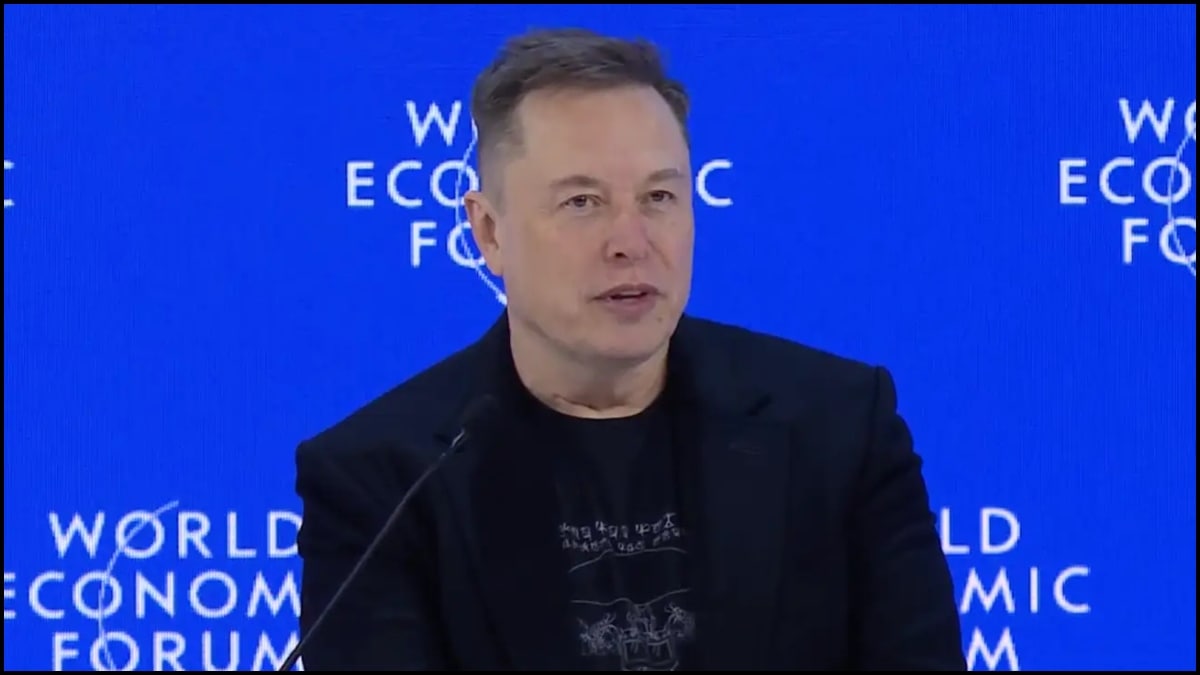
Elon Musk at Davos 2026: Robots, Mars, and the Road to Abundance
Elon Musk stepped onto the stage at the World Economic Forum in Davos, Switzerland, on January 22, 2026, for his first-ever appearance at the annual gathering. For years he had dismissed the event as an elitist club disconnected from reality, yet here he was, sitting down for a 35-minute conversation with BlackRock CEO and interim WEF co-chair Larry Fink. The discussion covered AI breakthroughs, humanoid robots, energy limits, space colonization, and Musk's core drive to secure humanity's long-term survival. What emerged was a bold, optimistic blueprint for the future, one that blends massive technological leaps with practical business updates and a dash of Musk's signature humor.
Musk opened by framing his work across Tesla, SpaceX, xAI, and beyond as interconnected engineering challenges aimed at one big goal: maximizing the odds of a thriving, enduring civilization. He stressed that these aren't separate companies chasing profit. They form a unified push to extend human consciousness, create abundance on Earth, and build a backup plan off-planet.
AI and Robotics: The Road to True Abundance
Much of the talk zeroed in on artificial intelligence and Tesla's Optimus humanoid robot. Musk described Optimus as a transformative tool capable of handling everyday chores, factory labor, elder care, childcare, and countless other tasks. He predicted that humanoid robots will eventually outnumber people, saturating human needs and triggering an unprecedented economic explosion.
Right now, Optimus bots perform basic tasks inside Tesla factories. Musk said he expects them to handle more complex jobs by the end of 2026. Looking ahead, he forecasted Tesla could begin selling these robots to the public by the end of 2027, but only after reaching high levels of reliability, safety, and broad functionality.
He tied this vision to AI progress, warning that superintelligence is closer than many realize. Musk suggested AI could surpass the intelligence of any single human by the end of this year or no later than next year. By around 2030 or 2035, he said, it might exceed the combined intelligence of all humanity. Combined with ubiquitous robotics, this creates what he calls the real path to "abundance for all." Poverty and scarcity could end not through redistribution but through technology generating endless goods and services at near-zero marginal cost.
He added a cautious note, referencing the Terminator films and stressing the importance of safe development to prevent dystopian outcomes. Still, his tone remained overwhelmingly positive: robots and AI don't replace human purpose; they free us from drudgery so we can pursue meaning elsewhere.
Energy: The Real Bottleneck Holding Back AI
Musk didn't shy away from practical hurdles. He called electrical power the fundamental limit on AI deployment today. Chip production is scaling exponentially, but grids can't keep up with the demand from massive data centers. He warned that soon we might produce more chips than we can power.
To solve this, Musk advocated for rapid solar expansion paired with battery storage. He criticized U.S. tariffs on solar panels, arguing they artificially inflate costs and slow clean energy rollout. Looking further out, he floated space-based solar power as a game-changer: collect sunlight in orbit and beam it down to Earth. This could meet AI's voracious appetite without terrestrial constraints.
He also mentioned solar-powered AI satellites in deep space as a logical next step, hinting at convergence between SpaceX launch capabilities, Tesla energy tech, and xAI models.
Mars and Multi-Planetary Life: Humanity's Insurance Policy
SpaceX ambitions took center stage too. Musk reiterated why becoming multi-planetary matters so much. Earth faces too many existential risks, from asteroids to human error. Extending life and consciousness to other worlds acts as insurance for the species.
He spoke of building a self-sustaining city on Mars in 20 to 30 years. When Fink asked if Musk personally wants to go there (and perhaps die on the red planet), he replied yes, but "just not on impact." The line drew laughs, but it underscored his seriousness.
Key to this timeline is Starship achieving full reusability this year, slashing launch costs dramatically. Musk compared it to shifting from single-use airplanes to reusable jets. Lower costs open the door to frequent flights, cargo delivery, and eventual human settlement.
A Few Light Moments and Broader Outlook
The conversation wasn't all heavy futurism. Musk cracked jokes about aliens (SpaceX satellites have never needed to dodge one, so intelligent life might be rare), peace summits, and even tossed in quips about politics and sci-fi tropes. He closed by urging optimism: it's better to err on the side of being an optimist and wrong than a pessimist and right.
What This Appearance Really Means
Musk's Davos debut surprised many, given his past criticisms of the forum. Yet he used the platform to broadcast his tech-driven worldview to global leaders, investors, and policymakers. Whether his timelines prove accurate (he's known for ambitious deadlines), the core ideas hit hard: AI and robotics could redefine labor and economics, energy abundance unlocks everything else, and space offers our best shot at long-term survival.
Some will call it hype or billionaire escapism. Others see pragmatic urgency in a world facing AI risks, energy crunches, and geopolitical strains. Either way, Musk painted a picture of exponential progress where technology solves humanity's toughest problems and opens doors we can barely imagine today.
His message from the alpine stage was clear: stay excited about what's coming. The future he's chasing is ambitious, interconnected, and unapologetically hopeful.
Elon Musk: I’ve been asked a few times, do you want to die on Mars? And I’m like, yes, but just not on impact.
Comments0
Join the conversation
Log in to share your thoughts with the community.
Login to CommentNo comments yet
Start the conversation!